Raksts:
Do you really need 10,000 steps a day? What science says about walking and longevity
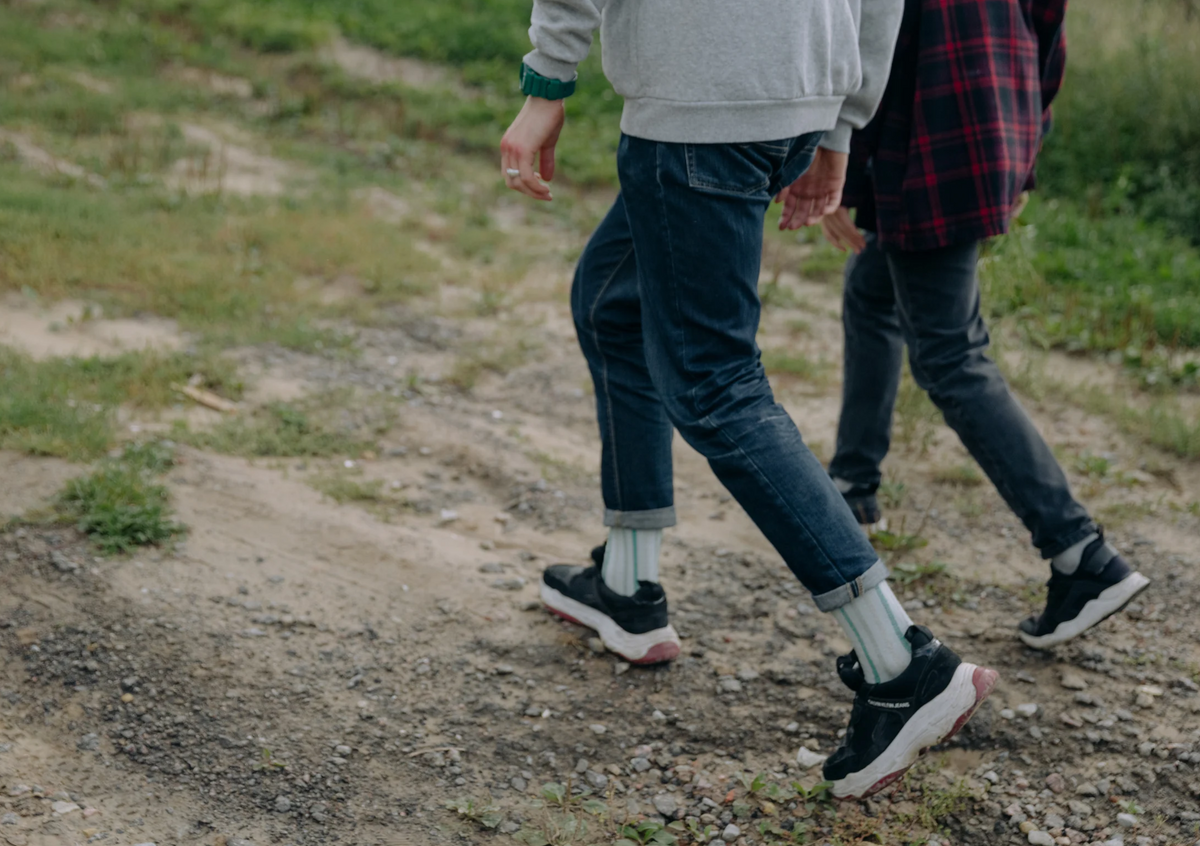
Do you really need 10,000 steps a day? What science says about walking and longevity
Walking is one of the most accessible forms of physical activity, yet many people measure its effectiveness against a single target: 10,000 steps per day. Although this number has become a popular benchmark, scientific research suggests that meaningful health benefits can be achieved at lower step counts.
For healthy ageing, the important question is not whether everyone reaches the same number, but how regular movement contributes to cardiovascular health, metabolic function and long-term physical independence.
What does the research show?
A 2025 systematic review and meta-analysis published in The Lancet Public Health examined associations between daily step counts and multiple health outcomes.
Compared with walking 2,000 steps daily, reaching approximately 7,000 steps was associated with a 47% lower risk of all-cause mortality, a 25% lower risk of developing cardiovascular disease and a 14% lower risk of developing type 2 diabetes.
These findings are observational, meaning they show associations rather than proving that a particular step count directly prevents disease. Nevertheless, they suggest that 10,000 steps is not a universal threshold for achieving health benefits.
An earlier 2022 meta-analysis also found that the number of steps associated with the greatest reductions in mortality risk varied by age, with benefits tending to level off at approximately 6,000-8,000 steps among adults aged 60 and older.
Why walking matters for healthy ageing
Regular walking engages several systems important for maintaining long-term health. It increases physical activity, engages skeletal muscle and contributes to cardiovascular fitness and metabolic function.
Walking can also help reduce prolonged sedentary time, which is particularly relevant for people who spend much of their day sitting.
Both the amount and intensity of movement matter. Brisk walking can contribute to moderate-intensity physical activity, while slower walking still provides an opportunity to increase daily movement.
For people who currently walk very little, gradually increasing their daily steps may be more beneficial and realistic than immediately aiming for 10,000.
Why walking should be combined with strength training
Although walking provides important cardiovascular and metabolic benefits, it does not fully replace resistance training.
Muscle strength becomes increasingly important with age because skeletal muscle contributes to movement, glucose regulation, balance and physical independence. Combining regular walking with strength training therefore provides a more complete approach to maintaining physical function.
Creatine is one of the most extensively researched supplements for exercise performance. It contributes to increased physical performance during successive bursts of short-term, high-intensity exercise when 3 grams are consumed daily, under the conditions established by EU regulations.
L Cell Creatine Monohydrate provides a measured source of creatine for people incorporating resistance training or other high-intensity activities into their routine. While creatine is not proven to increase daily step counts, it may complement an exercise programme that combines walking with strength-focused activity.
Building a sustainable movement routine
An effective walking routine should be realistic enough to maintain consistently. Short walks during work breaks, walking after meals or choosing stairs instead of lifts can gradually increase daily activity.
The World Health Organization recommends at least 150-300 minutes of moderate-intensity aerobic activity per week, alongside muscle-strengthening activities on two or more days.
For longevity, the priority is maintaining cardiovascular fitness, muscle strength and mobility rather than reaching an arbitrary daily number. Scientific evidence suggests that increasing daily movement, even without reaching 10,000 steps, can be a meaningful starting point.
Scientific sources
Ding D et al. (2025). Daily steps and health outcomes in adults: a systematic review and dose-response meta-analysis. The Lancet Public Health.
Paluch AE et al. (2022). Daily steps and all-cause mortality: a meta-analysis of 15 international cohorts. The Lancet Public Health.
World Health Organization. (2020). WHO Guidelines on Physical Activity and Sedentary Behaviour.
European Commission Regulation (EU) No 432/2012. Authorised health claim for creatine and physical performance.
<div class="dynamic-checkout__content" id="dynamic-checkout-cart" data-shopify="dynamic-checkout-cart"> <shopify-accelerated-checkout-cart wallet-configs="[{"supports_subs":true,"supports_def_opts":false,"name":"shop_pay","wallet_params":{"shopId":73057599754,"merchantName":"L Cell","personalized":true}},{"supports_subs":true,"supports_def_opts":false,"name":"paypal","wallet_params":{"shopId":73057599754,"countryCode":"LT","merchantName":"L Cell","phoneRequired":true,"companyRequired":false,"shippingType":"shipping","shopifyPaymentsEnabled":true,"hasManagedSellingPlanState":false,"requiresBillingAgreement":false,"gatewayType":"CONNECTED","merchantId":"7N3C3TYAXNTK4","sdkUrl":"https://www.paypal.com/sdk/js?components=buttons\u0026commit=false\u0026currency=EUR\u0026locale=en_US\u0026client-id=AexZEtAxk09Ncgj6FSWFFyGKbxxAZ_LTyJ2DPdJWl1YUlecinmc5AfIaRF2qYjWlusWahlzz6SVkY5Ci\u0026merchant-id=7N3C3TYAXNTK4\u0026intent=capture","serviceableCountryCodes":["AC","AD","AE","AF","AG","AI","AL","AM","AO","AR","AT","AU","AW","AX","AZ","BA","BB","BD","BE","BF","BG","BH","BI","BJ","BL","BM","BN","BO","BQ","BR","BS","BT","BW","BY","BZ","CA","CC","CD","CF","CG","CH","CI","CK","CL","CM","CN","CO","CR","CV","CW","CX","CY","CZ","DE","DJ","DK","DM","DO","DZ","EC","EE","EG","EH","ER","ES","ET","FI","FJ","FK","FO","FR","GA","GB","GD","GE","GF","GG","GH","GI","GL","GM","GN","GP","GQ","GR","GS","GT","GW","GY","HK","HN","HR","HT","HU","ID","IE","IL","IM","IN","IO","IQ","IS","IT","JE","JM","JO","JP","KE","KG","KH","KI","KM","KN","KR","KW","KY","KZ","LA","LB","LC","LI","LK","LR","LS","LU","LV","LY","MA","MC","MD","ME","MF","MG","MK","ML","MM","MN","MO","MQ","MR","MS","MT","MU","MV","MW","MX","MZ","NA","NC","NE","NF","NG","NI","NL","NO","NP","NR","NU","NZ","OM","PA","PE","PF","PG","PH","PK","PL","PM","PN","PS","PT","PY","QA","RE","RO","RS","RW","SA","SB","SC","SD","SE","SG","SH","SI","SJ","SK","SL","SM","SN","SO","SR","SS","ST","SV","SX","SZ","TA","TC","TD","TF","TG","TH","TJ","TK","TL","TM","TN","TO","TR","TT","TV","TW","TZ","UA","UG","UM","US","UY","UZ","VA","VC","VE","VG","VN","VU","WF","WS","XK","YE","YT","ZA","ZM","ZW"]}}]" access-token="f4115d6e76a0ecff9d111ccebb391403" buyer-country="LV" buyer-locale="lv" buyer-currency="EUR" shop-id="73057599754" cart-id="c079f38994716fee9476db8d80685b87" > <div class="wallet-button-wrapper"> <ul class='wallet-cart-grid wallet-cart-grid--skeleton' role="list" data-shopify-buttoncontainer="true"> <li data-testid='grid-cell' class='wallet-cart-button-container'><div class='wallet-cart-button wallet-cart-button__skeleton' role='button' disabled aria-hidden='true'> </div></li><li data-testid='grid-cell' class='wallet-cart-button-container'><div class='wallet-cart-button wallet-cart-button__skeleton' role='button' disabled aria-hidden='true'> </div></li> </ul> </div> </shopify-accelerated-checkout-cart> </div>




Atstāt komentāru
Šo vietni aizsargā hCaptcha, un uz to attiecas hCaptcha privātuma politika un pakalpojumu sniegšanas noteikumi.